One of the best things about traveling is experiencing different cultures. One of the worst? Trying to communicate when you have absolutely no idea what people are saying.
Before coming to Cyprus, I thought, “Eh, everyone speaks English, right?” And while many Cypriots do speak English, I quickly learned that things can still get… interesting.
Cyprus has two official languages: Greek and Turkish. The southern part of the island (Republic of Cyprus) speaks Greek, while the northern part (Turkish Republic of Northern Cyprus) speaks Turkish. English is widely spoken, but not everywhere. Head into small villages, local markets, or family-run tavernas, and suddenly, you might feel like you’ve just landed on another planet.
So, if you’re planning a trip to Cyprus, here are some hilarious (and slightly embarrassing) language mishaps to prepare for — along with some useful tips to survive!
Greek Signs and a Confused Tourist (Me)
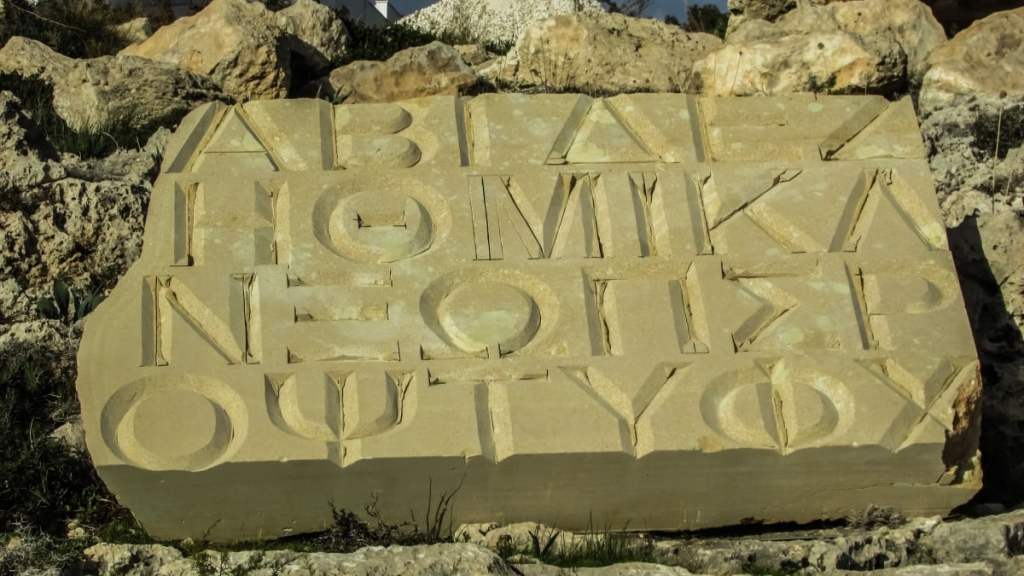
Greek writing looks super cool and mysterious — until you realize you actually need to read it to find your way.
Cypriot road signs are usually written in both Greek and English, but sometimes, you’ll only see Greek letters. And if you’re not familiar with them? Good luck.
The first time I saw a sign that said “Λεμεσός” (which, by the way, is Limassol), I thought, Okay, I’ll just sound it out. That’s when I realized… Greek letters are nothing like the Latin alphabet. Instead of turning towards the city, I somehow ended up driving into a random olive farm.
Pro tip: Learn a few basic Greek letters before your trip or download Google Maps offline so you don’t end up lost in the countryside!
Ordering Food… or Accidentally Buying a Whole Fish Market

Cypriot food is amazing, but ordering it when you don’t speak Greek? A risky adventure.
One evening, I wanted to order “a little fish” at a taverna. I smiled confidently at the waiter, trying my best to pronounce λίγο ψάρι (lígo psári – “a little fish”). He nodded enthusiastically, and I thought, “Great, he understood me!” A few minutes later, he came back with a gigantic seafood platter big enough to feed an entire village.
Apparently, I didn’t say “a little” loud enough, or maybe my pronunciation turned “a little” into “a lot.” Either way, my budget for dinner was completely destroyed.
Pro tip: If you’re unsure, point at the menu or ask the waiter to show portion sizes before ordering. Also, be careful when saying “λίγο” (a little) — because, as I learned, it can apparently mean “a LOT.”
The “Yes” That Actually Means “No” (Or Is It the Other Way Around?)
Here’s something that completely threw me off: Cypriots sometimes shake their heads when they mean “yes” and nod when they mean “no.”
Imagine me at a bakery, trying to buy a delicious-looking cheese pie:
Me: “Is this made with halloumi?”
Lady behind the counter: shakes her head
Me: “Oh, so it’s NOT halloumi?”
Lady: shakes her head again
Me: totally lost and questioning everything I know about life 😵
After standing there awkwardly for what felt like hours, she smiled, handed me the pie, and said “Yes, it’s halloumi.” Apparently, shaking your head in Cyprus can sometimes still mean “yes” — especially when paired with a smile.
Pro tip: Don’t rely only on gestures — pay attention to facial expressions too! If someone shakes their head but smiles, they probably mean yes. Confusing? Absolutely. But once you get the hang of it, it’s actually kind of fun!
When Google Translate Fails You Spectacularly

If you think Google Translate will save you in every situation… think again.
I once tried to translate “Where is the nearest ATM?” into Greek. I confidently showed my phone to a shopkeeper, only to see her burst out laughing. Apparently, my translation was closer to “Where is the closest alien spaceship?”
After that, I decided it was safer to just ask in English and use Google Maps instead of my terrible Greek skills.
Pro tip: Google Translate is useful, but don’t trust it blindly — especially for complicated phrases. If you’re unsure, stick to simple words or ask a local for help in English.
Final Thoughts
If you get lost because of Greek signs, take it as an adventure.
If you order too much food, enjoy the feast.
If Google Translate embarrasses you, just laugh it off.
Language barriers can be frustrating, but they also make for the BEST travel stories. So next time you accidentally order enough food for 10 people or end up asking for directions to a UFO, just go with it and enjoy the experience!
Have you ever had a funny language mishap while traveling? Tell me in the comments — I need to know I’m not the only one!
 W Strone Slonca - Towards the sun
Leave a comment